How Inconsistent Follow-Up Hurts Your Revenue Growth

Steven Janiak
Founder & AI Systems Architect
You reached out to 150 leads last month. Only 22 converted. The rest? Lost in the cracks of inconsistent sales follow-up. This scenario signals not just missed opportunities but a direct hit to your revenue growth. Without a systematic approach, the financial impact becomes significant. Let's explore how automation can resolve this issue.
Key Takeaway
"Revenue inconsistency is rarely due to a lack of leads. It's often a follow-up problem. Companies that fix this don't chase harder; they automate smarter."
The Real Cost of Inconsistent Sales Follow-Up
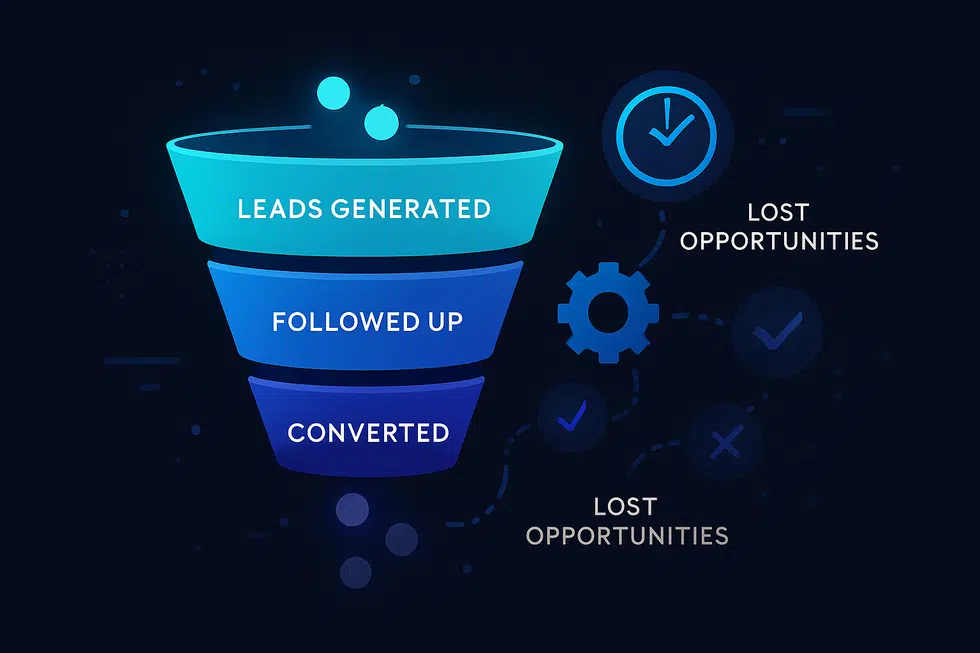
Inconsistent sales follow-up often leads to lost revenue opportunities for growing companies. Imagine generating 200 leads, but only converting a fraction due to mismanaged follow-ups. This can easily translate to tens of thousands in lost sales. When your team can’t keep track of these interactions, the revenue leakage is real.
Consider this breakdown:
- Leads Generated: 200
- Followed Up: 60
- Converted: 15
- Lost Revenue from Missed Follow-Ups: 30 leads x $1,000 average deal size = $30,000
Inconsistent follow-up directly impacts your bottom line. The good news? Automation can plug these gaps, ensuring every lead is nurtured effectively.
Why Traditional Fixes Aren’t Solving It
Many companies try to fix inconsistent follow-ups by hiring more sales reps or investing in new tools. Unfortunately, these solutions often fall short. More people or software doesn’t always mean better results.
Here’s why:
- Hiring: High costs, training time, and management overhead
- New Tools: Tool sprawl, increased complexity, integration challenges
Without a cohesive system, these fixes don’t solve the root problem. What you need is a structured approach that aligns your sales processes.
What Revenue Automation Actually Means
Revenue automation involves creating a seamless, repeatable process to manage your sales pipeline. It’s not about adding complexity; it’s about simplifying tasks. With automation, every lead is systematically tracked, ensuring no opportunity slips through the cracks.
Key benefits include:
- Consistent and timely follow-ups
- Automated reminders for reps
- Better alignment between sales and marketing
- Clear visibility into pipeline stages
Automation transforms your sales process into a predictable revenue-generating machine.
How Much Revenue Automation Costs (Real Numbers)
Implementing revenue automation can range from $5,000 to $15,000, depending on the complexity and size of your system.
For most growing companies, a fixed-price implementation starting at $5,000 is common. This investment can quickly pay for itself by capturing lost revenue and improving efficiency.
Automation is often more cost-effective than hiring additional staff.
What Happens in the First 30 Days
Implementing revenue automation is a structured process. Here’s what you can expect in the first 30 days:
- Audit: Analyze current processes and identify pain points.
- Design: Develop a custom automation strategy tailored to your needs.
- Integration: Connect CRM, email, and other tools for seamless operations.
- Testing: Ensure everything runs smoothly before full deployment.
- Training: Equip your team with the skills to leverage the new system effectively.
By the end of the first month, you will see clear improvements in process consistency and follow-up efficiency.
Is This Right for a Company Like Yours?
Automation may sound daunting, but it’s suitable for any growing B2B company facing follow-up challenges. Addressing common objections:
- Is this overkill? Not when revenue is at stake. Automation scales with your growth.
- Can’t we just hire? Hiring adds cost and complexity without solving system issues.
- Will this be complicated? Our implementations are designed to be user-friendly and integrate smoothly.
- Are we too small? Companies of all sizes can benefit from consistent follow-up processes.
Automation solves not just the symptoms but the root cause of follow-up failures.

Steven Janiak
Founder & AI Systems Architect
Steven Janiak is the founder of Sailient Solutions, an AI and business infrastructure consultancy based in Charleston, South Carolina. He specializes in AI-driven revenue systems, CRM automation, and operational architecture for growth-stage service businesses. With over a decade of experience building high-performance web and MarTech systems, Steven focuses on practical AI implementations that drive measurable ROI.
See How This Applies to Your Business
You just read the concept. Now see what it would look like inside your business and what systems would actually make sense.
Guide delivered instantly via email